
“Why is it so hard to sing on my period? Am I crazy to think there’s a link?”
“My voice is hoarse on a regular basis and I feel like I’m losing high notes. Is it possible it’s related to menopause?”
These are real-life questions I have heard asked in hushed tones, from singer friends to students of mine – singers of all ages and at all stages of their career. Taboo keeps these conversations private and often full of shame. Is it my technique? Am I complaining? Do all menstruating/menopausal people go through this? Am I weak? What am I doing wrong?
If you’ve asked these questions, you are not alone. Science has asked the same questions. Although the answers are not always clear-cut, hopefully the findings will assure you, your friends or your students, that hormones do indeed affect the singing voice.
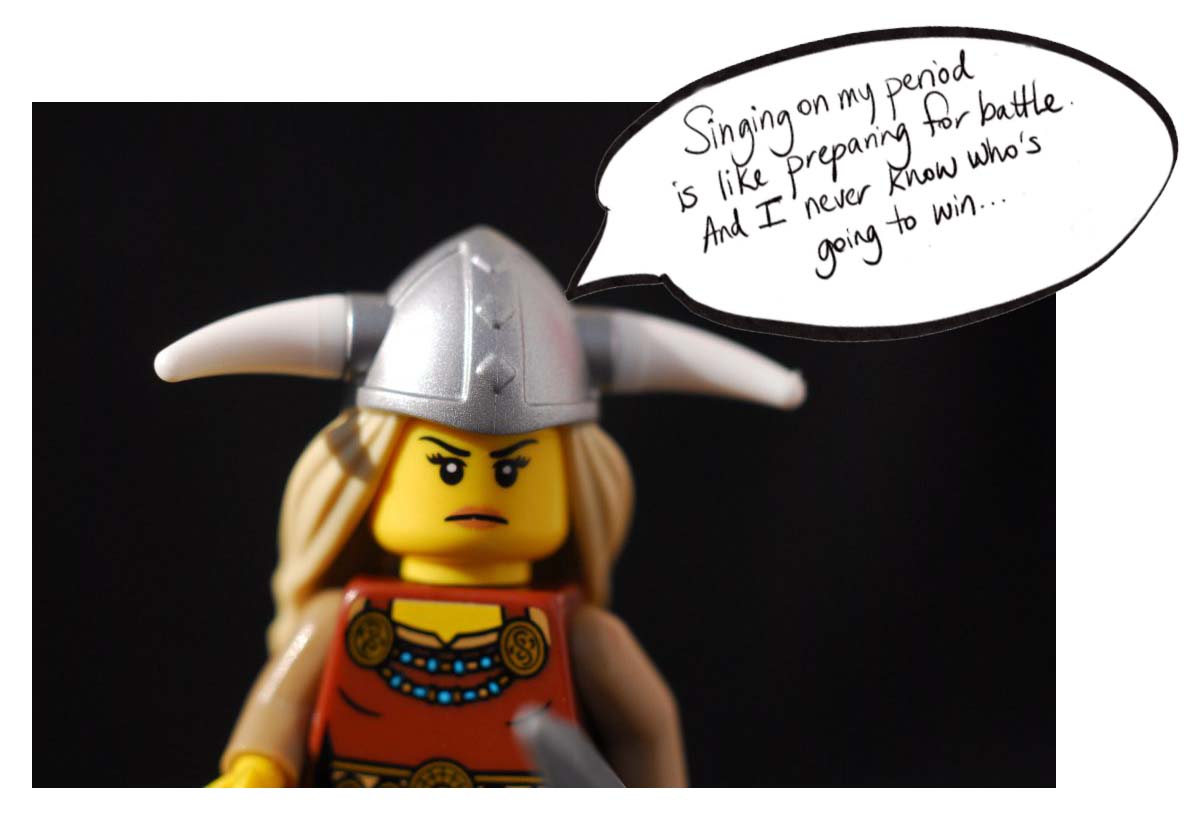
La la la…
Hormones can influence the vocal fold structure (Abitbol 1999, 427). They also colour the timbre of an individual voice (431).
The voice is made up of three parts: the vibratory body (vocal folds in the larynx), respiration (breath) and resonators (throat, nasal and mouth cavities).
Continue reading for background information about hormones and how they work! Or, click vocal apparatus to learn more about the voice or jump to how the voice is affected in different life cycles.
What exactly are hormones?
The Endocrine system – from Greek endo (within) and crine (to secrete)
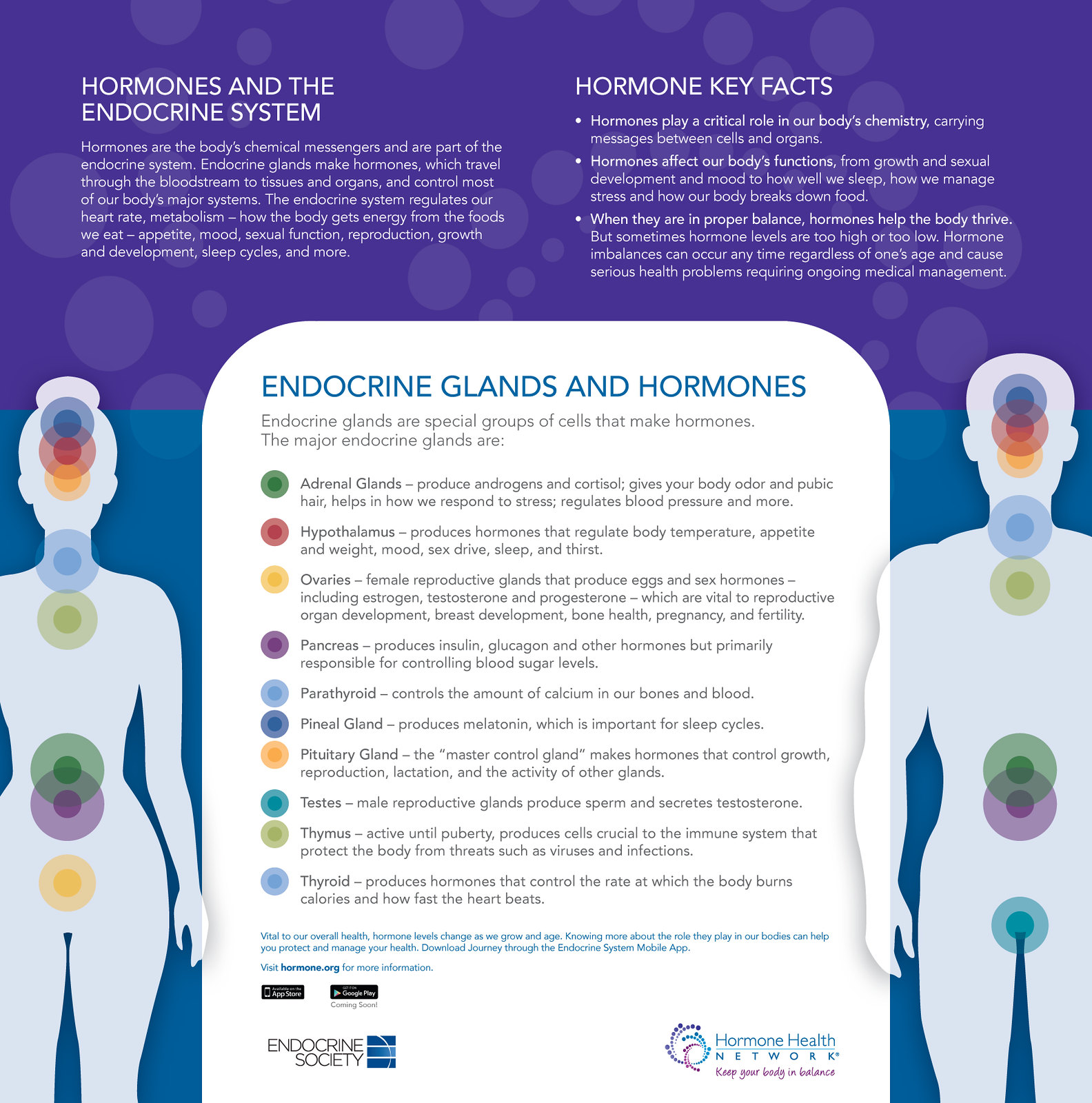
“The endocrine system consists of a collection of widely scattered glands and specialized cells that secrete hormones into the bloodstream” (“Endocrine System Overview”, Introduction section)
With the nervous system, it regulates all aspects of body function: co-ordination, homeostasis (internal balance), glandular secretion, growth and development, physical appearance, behaviour, metabolism, digestion, body fluids, moods/emotions, hunger pains, immune response, circadian rhythm (Nussey & Whitehead, 2001).
Hormones – “from the Greek hormao meaning ‘I excite or arouse’”. (Nussey & Whitehead, 2001)
Hormones are chemical molecules or messengers which travel throughout the body via the bloodstream. They “communicate” in order to bring about change on a cellular level.
How do hormones work?
The endocrine glands are stimulated to release a hormone. They secrete in frequent little bursts which increases how much hormone is being released and circulated throughout the body. Each hormone has a specific job to do and acts only on their specific kind of receptor (their target cell).
There are 3 ways in which the endocrine glands are stimulated.
[infobox color=”#a8a8a8″ textcolor=”#dd3333″]Neural[/infobox]
[infobox color=”#a8a8a8″ textcolor=”#dd3333″]Humoral[/infobox]
[infobox color=”#a8a8a8″ textcolor=”#dd3333″]Hormonal[/infobox]
One example would be that the sympathetic nervous system is triggered by stress. It sends a neural signal to the adrenal medulla which then releases epinephrine and norepinephrine.
Some glands monitor levels of various elements in the blood. These glands then decide if the concentration of their element needs to be rebalanced in the blood. If so, the gland will release a hormone. These glands and their hormones work to keep the body in balance (called homeostasis).
Chain-reaction or stimulation by hormone: one endocrine gland releases a hormone which then causes another gland to respond and release their own hormone.
Now, let’s start at the very beginning: first step, puberty!
“The hormonal climate determines the sex of the voice” (Abitbol 1999, 433).
These changes are experienced by most humans, with a few exceptions.
(This blog will address phenotypical development. The use of the XX / XY and female / male binaries does not encompass the full variety of human anatomy or gender, but they can be useful to understand different experiences of puberty and vocal development. )
| XX body (female) | XX body (male) |
|---|---|
| Puberty occurs between the ages of 8-13 on average. | Puberty occurs between the ages of 9-13 on average |
| No Adam’s apple (the thyroid and cricothyroid membrane don’t change much). | Adam’s apple forms because of developed thyroid cartilage. |
| Vocal muscle stays narrow and supple, thickening only a little. | Muscular and mucosal layers of the vocal folds thicken; the folds lengthen and widen. |
| The mucosa become hormone-dependent (on estrogen and progesterone), mirroring the effects these same hormones have on the cervical mucosa. (See PMS and PMVS) | Breaking voice: can last 1-5 years. Increased testosterone and dihydrotestosterone grow the laryngeal ligaments and muscles. This leads to cracking and top notes dropping. |
Historical perspective: the Castrati
(Abitbol 1999, 426)
Before reaching puberty, boys were castrated and therefore would not develop testosterone. This means the voice remained in the same boy/adult female range, while the rest of the body grew into an adult male musculoskeleton (increased lung capacity, cardiovascular apparatus and muscle mass). This gave castrati a large range (3-4 octaves), large lung capacity and power.
Menstrual cycle hormones
My voice often gets tired when “Aunt Flo” comes to town. What could this be?
The most common hormonal change affecting the voice happens during the menstrual cycle. For many singers, these hormonal changes and their symptoms happen monthly. Sadly, it’s rarely spoken about because talking about women’s bodies is often still taboo. Euphemisms like Aunt Flo and Moon Time abound, women are afraid to be seen as “weak” if they complain, and this only leads to a lack of resources and information in general.
Click here to read more about the menstrual cycle and how it affects the voice:
And then there was none.
Menopause… it comes for everyone. For some, it’s a relief; for many, it’s awful.
This is compounded even further when you use your voice to earn a living and suddenly you feel it changing, weakening, and you begin to lose control over it.
References
- Abitbol, J., Abitbol, P. & Abitbol, B. (1999). Sex hormones and the female voice. Journal of Voice, 13:3, 424-446. https://doi.org/10.1016/S0892-1997(99)80048-4.
- Hari Kumar, K.V.S., Garg, A., Ajai Chandra, N.S., Singh, S.P., & Datta, R. (2016). Voice and endocrinology. Indian Journal of Endocrinology and Metabolism, 20:5, 590-594. doi:10/4103/2230-8210.190523.
- Human Anatomy and Physiology. (n.d.) Endocrine System. “Introduction”. www.anatomy.tv.
- Nussey S. & Whitehead S. (2001). Principles of endocrinology. Endocrinology: An Integrated Approach. Oxford: BIOS Scientific Publishers. https://www.ncbi.nlm.nih.gov/books/NBK20.
This is super interesting! I found the information really useful and helpful to understand all these hormonal changes happening in our body.
Thank you for sharing this material and congratulations, Jacqueline!
Thanks, Julia! It was really interesting to delve into this research and try to explain why so many people struggle so regularly with their bodies and voices!