
Based on the study by Ackermann et al. (2002), as well as an in depth analysis of common injuries amongst upper and lower strings players, Wilke et al. (2011) developed a “preventative mobility program” consisting of specific exercises for string players to reduce risk of injury. I have extracted exercises from these studies that are more beneficial to the greater musician community, and less focused the on specific motions of string players. Any musician can practice these with little risk of hurting themselves,
Taken from Ackermann et al. (2002), these exercises should be aimed at improving endurance as opposed to strength – meaning lighter weight with more repetitions. While both strength and endurance training programs were employed in this study, endurance training was significantly more beneficial in reducing perceived exertion and increasing repetitions / weight over a 6 week period. Endurance training focuses on higher repetitions with lower weight. Starting weight should be chosen so that 25-30 repetitions bring the person to fatigue (Ackermann et al 2002).
Bicep curl: Stand with arms by your sides, raising weight to shoulders by bending your elbows only.Endurance in the upper arm can facilitate efficient support when holding an instrument in place.

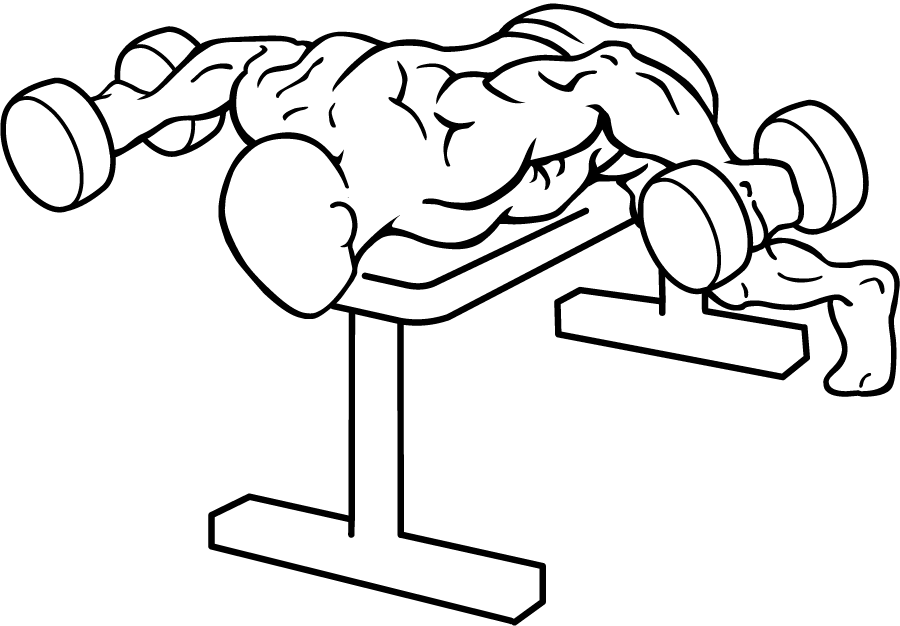
Reverse fly: Prone over a Swiss ball or bench, hold the weights out to your sides with elbows at a slight angle and forearms facing the floor. Squeeze the shoulder blades together to raise elbows, and subsequently work your upper back muscles to aid in proper posture.
Lateral raise: Stand with your arms by your sides, raising weights to 90 degrees of shoulder abduction. These exercises work your core abdominal muscles, as well as muscles running from the trapezius in your upper back to the deltoids in your shoulders.
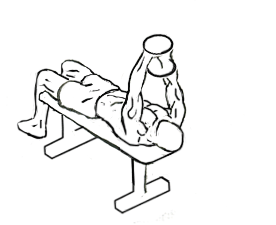
Tricep extension: Prone over a swiss ball or bench, hold a single weight behind your head with elbows at a 90 degree angle. Straighten elbows to lift the weight above your head. Endurance in the upper arm can facilitate efficient support when holding an instrument in place.
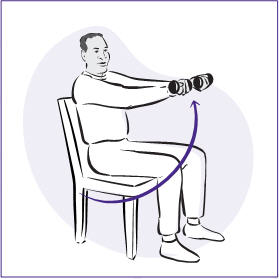
Shoulder forward flexion: Sit, holding hands and weights at your sides with palms facing inward. Raise both arms in front of you to shoulder height, rotating so palms face inward. Slowly return arms to your sides. This exercise will improve stability in your shoulders and aid in flexibility and range of upper limb motion.
Sit ups – Lie in the floor with your knees bent and feet flat on the ground. Support your head with your hands, and raise one elbow to the opposite knee. Rotate direction with each repetition.
Push ups – A variety of options exist for this exercise, as bringing it to 25-30 repetitions may be more difficult for some body types than others. The easiest option would be push ups with both knees and both sets of toes touching the ground. For a slightly more demanding exercise, lift your toes up to perform push-ups while just supporting yourself with your knees. The full push-up position would be on your hands and toes with hips extended.
Taken from Wilke et al. (2011), the following exercises improve basic endurance and activate the cardiovascular system while requiring no previous experience. Jogging, cycling, and/or swimming are highly recommended as compliments to the aforementioned weight-training exercises.
- Walking, running – 2-3x/wk 20-60 minutes (Beginners should alternate between walking and running)
- Cycling – 2-3x/wk, 20-60 min
- Swimming – 2-3x/wk, 20-60 min
Swimming is especially beneficial as it works the cardiovascular system while strengthening the spinal erector and mobilizing the shoulder girdle (Wilke 2011). Beginners should be taught how to do a basic front-crawl swimming stroke, and should perform laps with breaks at least every 5-10 minutes.
All exercises suggested should be performed with frequent breaks and begin with low weight. The musician should increase intensity as needed, preferably with the guidance of a personal trainer. Consultation with a professional can also help add more specialized exercises to your program that are geared towards your instrument.
What are some common injuries that occur in your instrument group? What types of exercises do you think could prevent these injuries?
[toggle title=”References”]
- Ackermann, B., Adams, R., & Marshall, E. (2002). Strength or endurance training for undergraduate music majors at a university? Medical Problems of Performing Artists, 17(1), 33-41.
- Cahn, D. (2008). The effects of varying ratios of physical and mental practice, and task difficulty on performance of a tonal pattern. Psychology of Music.
- Guptill, C., & Zaza, C. (2010). Injury Prevention: What music teachers can do. Music Educators Journal, 28-34.
- Simmons, A. L. (2011). Distributed practice and procedural memory consolidation in musicians’ skill learning. Journal of Research in Music Education.
- Tiernan, M. R. A. M. (2001). Knowledge and practices of piano teachers in preventing playing-related injuries in high school students. Medical Problems of Performing Artists, 16(1), 32.
- White, G., & Malekmanesh, L. (2014, January 1). Occupational Health and Safety. Retrieved April 13, 2015, from http://www.mohawkcollege.ca/Page4873.aspx
- Wilke, C., Priebus, J., Biallas, B., & Froböse, I. (2011). Motor activity as a way of preventing musculoskeletal problems in string musicians. Medical problems of performing artists, 26(1), 24.
- Williamon, A. (Ed.). (2004). Musical excellence: Strategies and techniques to enhance performance. Oxford University Press.
- Wynn Parry, C. B. (2003). Prevention of musicians’ hand problems. Hand clinics, 19(2), 317-324.
- Zaza, C. (1994). Research-based prevention for musicians. Medical Problems of Performing Artists, 9(1), 3-6.
[/toggle]
Leave a Reply