
Every performing artist knows the unique sensation of entering the stage. We spend weeks, even months, preparing to perform on that sacred place. And then when the time comes, symptoms that seem uncontrollable set in: our heart wants to jump out of our chest, our legs weaken, our hands shake and we feel that our body is abandoning us. Despite meditating during weeks, taking 5 bananas before the concert, visualizing and positive thinking, this discomfort persists. And when we hear a colleague talking quietly about beta blockers, those strange and worrying pills, we are quickly inclined to fear it. But what are they really, what are their effects on our bodies and what is their role in the music industry?
Our body during stage fright
When we face a stressful situation, our body is unable to differentiate a real threat to our life from a psychological fear. Under a threat, our brain triggers the fight-or-flight response to protect us from life threats. The fight-or-flight symptoms are very familiar to us: cold hands, sweat, heart racing and shaking (Braive, 2016, March 31). These symptoms that often seem unavoidable during a musical performance result from chemical reactions in our bodies. Understanding those physiological events is the first step in exploring how beta-blockers may make a difference in music making.
Understanding adrenergic receptors
Adrenergic receptors are receptors located on our cells. They get activated when they bind with the adrenaline hormone. When adrenaline is released from our adrenal glands during the fight- or-flight response, the hormone being an agonist, triggers adrenergic receptors and then the organ that they are attached to (“Beta Blockers,” 2011).
An agonist is a substance that binds to a receptor and causes a reaction on the cell attached to it. An antagonist is a substance that blocks agonists from attaching to the receptors causing the opposite reaction of the agonist (Modi, 2022).

There are many adrenergic receptors in our body, but musicians might be particularly interested in the next three ones:
[tabs]
[tab title=”Arteries receptors”]
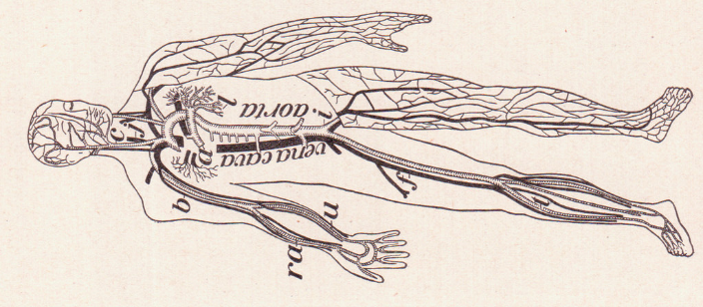
When adrenaline attaches to the adrenergic receptors in the arteries, it acts as an agonist to the receptor which then causes the narrowing of blood vessels. This phenomenon called vasoconstriction increases blood pressure. Higher blood pressure during the fight-or-flight response is responsible for some symptoms as tremors and excessive heat and sweat. Additionally, blood supply is sent to the skeletal muscles to prepare for fight or flight. That is why there is less blood supply in our extremities making our hands cold on stage while the rest of our body is uncomfortably hot (Cleveland Clinic, 2022).
[/tab]
[tab title=”Heart’s receptors”]
When adrenaline attaches to the adrenergic receptors in the heart, it acts again as an agonist and causes the heart to pump blood harder and faster which then causes an increase in blood pressure. In a real-life threatening experience, this allows an increase delivery of oxygen and nutrients to our muscles to confront the danger. On stage, as we do not need to run away with our main muscles, the activation of the heart’s adrenergic receptors only contributes to the high blood pressure symptoms and the awful feeling of a raging heart (Cleveland Clinic, 2022).

[/tab]
[tab title=”Lung’s receptors”]
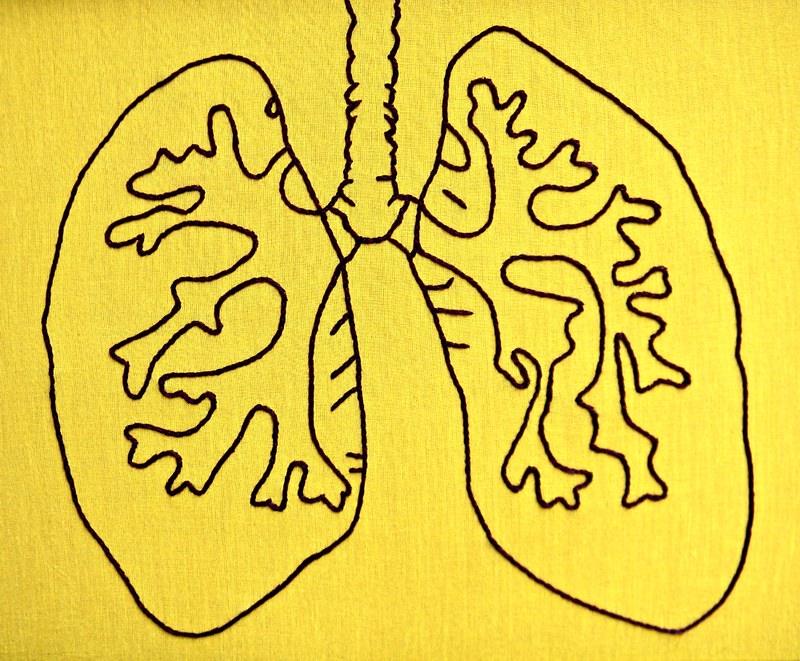
Finally, when adrenaline binds to the adrenergic receptors in our lungs, it acts as an agonist which causes not only the relaxation and dilation of the pulmonary airways to increase oxygen, but also makes our breathing more rapid and shallow, another familiar symptom of music performance anxiety (Cleveland Clinic, 2022).
[/tab]
[/tabs]
Unlike the agonist function of adrenaline which triggers the adrenergic receptors response, the antagonist effect of beta-blockers is to prevent those stress hormones from attaching to the receptors. This antagonist effect directly counteracts the high blood pressure, and the rate and force at which the heart beats. This drug is commonly used for people with hypertension and heart disease. For example, a patient recovering from a heart attack may benefit from beta-blockers as they will reduce the work required from the heart, preventing recurrence of heart failure and allowing for a better recovery (Farzam & Jan, 2022).
Beta blockers and musicians
[tabs]
[tab title=”Advantages for musicians”]
In musicians, taking beta-blockers will counteract the physical symptoms of stage fright and therefore those of the fight-or- flight response such as racing heart, trembling, sweating, cold hands and rapid breathing (Brantigan et al., 1982). Therefore, some consider beta-blockers to be a miracle pill for music making. Can you imagine getting on stage knowing that your body will be at his normal state no matter what? However, it is important to note that beta-blockers do not have relaxing qualities as they only act on the physical symptoms of stress. A musician on beta-blockers may still panic or have memory slips during a performance despite the cancellation of the physical symptoms of fight-or-flight response (Tindall, 2004).
[/tab]
[tab title=”Who is using them?”]
A study on 48 professional orchestras in the United States found that 27% of musicians routinely use beta-blockers (Bartel & Thompson, 2021). Their use is higher in among solo brass players, but string players are consistently using them too (Bartel & Thompson, 2021). however, it is undeniable that the use of beta-blockers is a taboo subject: i.e., it is rare to hear about it and when it is mentioned, opinions are often clear-cut and the pill and the ones using it are often and quickly condemned. With such high proportion of use and so little talk about it, it seems obvious that beta-blockers are the elephant in the room.
[/tab]
[tab title=”Warnings and side effects”]
It is important to note that the use of beta blockers is not without side effects and that it is important to respect its contraindications. Indeed, their antagonistic properties on the heart and blood can cause hypotension, and thus symptoms of fatigue, dizziness, and drowsiness. In addition, the use of beta-blockers in diabetics can be dangerous because they successfully mask the symptoms of hypoglycemia, not allowing them to react to restore the right level of sugar in their blood. On the other hand, the effects of beta-blockers on the lungs can be particularly dangerous for people with lung diseases like asthma as they can cause bronchospasms (Farzam & Jan, 2022).
[/tab]
[/tabs]
Stigmas and taboos
Sources of stigma
The taboo and stigma around beta-blockers can be explained by two comparisons. First, there is a concern about the use of beta-blockers on fairness and justice when it comes to auditions and competitions. One can quickly see a link to athletes and doping. Does everyone have an equal chance in an audition if some use beta-blockers and others do not? On the other hand, the ignorance on the subject raises concerns about the real effects of the drug and the risks of addiction. People are quick to draw parallels with drugs and alcohol, whereas beta-blockers have no sedative qualities and are not chemically addictive at all. However, the risks of dependence are real since some musicians cannot do without them to be able to perform (Patston & Loughlan, 2014).
Injustice or not?
In my opinion, it is quite normal for some musicians to develop an addiction when most of them take beta-blockers without the advice of their doctor and in an environment where information about them is not disseminated. However, for those musicians that would not be able to perform at all without beta-blockers, would it be a crime for them to take them regularly with their doctor’s approval? Is the stigma worth losing an artist? Furthermore, I believe that if we had a competitive context where all participants had at their disposal the tools adapted to them to adequately manage their performance anxiety, there would not be any inequity. Sadly, education on beta-blockers is almost non-existent in music universities. This approach is not taught as if it were not part of the reality of the music industry.
The dangers of silence
Unfortunately, the stigma of beta-blockers has direct consequences on their use. Musicians wanting to use beta-blockers to help their performance anxiety may be uncomfortable asking their doctor or seeking out appropriate information resources, which encourages them to take this medication without a prescription. In fact, 70% of classical musicians using this medication do so without their doctor’s approval, and therefore obtain the beta-blockers on the black market (Fishbein et al., 1988). This illegal practice is even more dangerous considering the contraindications of beta-blockers. A person prone to low blood pressure, diabetic or having lung problems could suffer serious health consequences or even death by self-prescribing instead of consulting a physician (Farzam & Jan, 2022).
The importance of education
I firmly believe that the main role of music universities is to prepare students as best they can for the profession of musician. Not only by the perfection of musical execution but also by the preparation for the particular realities that affect musicians. However, the question arises: how can the subject of beta blocking be properly introduced and supervised in universities? It may be relevant to educate students about beta blocking in graduate school, after relying fully on traditional evidence-based methods to manage performance anxiety. Beta-blockers could then be seen as a complementary aid to these techniques. Although this solution seems remote, even utopian, change is slowly taking place. I am confident that with effort, we can one day overcome the stigma of beta-blockers and live in a safer and healthier industry.
[toggle title=”References”]Bartel, L. R., & Thompson, E. G. (2021). Coping with performance stress: A study of professional orchestral musicians in Canada. Visions of Research in Music Education, 16(5), 35.
Beta Blockers. (2011). In M. G. Khan (Ed.), Encyclopedia of Heart Diseases (pp. 189-208). Humana Press. https://doi.org/10.1007/978-1-60761-219-3_24
Beta blockers: Types, Uses and Side Effects. (2022). Cleveland Clinic. https://my.clevelandclinic.org/health/treatments/22318-beta-blockers
Braive. (2016, March 31). The Fight Flight Freeze Response, Youtube; Braive. https://youtu.be/jEHwB1PG_-Q
Brantigan, C. O., Brantigan, T. A., & Joseph, N. (1982). Effect of beta blockade and beta stimulation on stage fright. The American Journal of Medicine, 72(1), 88-94. https://doi.org/https://doi.org/10.1016/0002-9343(82)90592-7
Farzam, K., & Jan, A. (2022). Beta Blockers. In StatPearls. StatPearls Publishing LLC. https://www.ncbi.nlm.nih.gov/books/NBK532906/
Fishbein, M., Middlestadt, S. E., Ottati, V., Straus, S., & Ellis, A. (1988). Medical problems among ICSOM musicians: overview of a national survey. Medical problems of performing artists, 3(1), 1-8.
Modi, J. (2022). Agonist vs. Antagonist: What’s the Difference? What’s the Buzz: The Bee Healthy Blog. https://www.buzzrx.com/blog/agonist-vs-antagonist-whats-the-difference
Neftel, K. A., Adler, R. H., Käppeli, L., Rossi, M., Dolder, M., Käser, H. E., Bruggesser, H. H., & Vorkauf, H. (1982). Stage fright in musicians: a model illustrating the effect of beta blockers. Psychosomatic Medicine Journal, 44(5), 461-469. https://doi.org/10.1097/00006842-198211000-00008
Patston, T., & Loughlan, T. (2014). Playing with Performance: The use and abuse of beta-blockers in the performing Aats. Victorian journal of music education, 3.
Tindall, B. (2004, Oct. 17, 2004). Better playing through chemistry. The New York Times. https://mcgill-my.sharepoint.com/:b:/g/personal/sebastian_gonzalezmora_mail_mcgill_ca/EdHvu56k4SVCkwKWYxw6jtYBOuwqeGPcczPK_h2ljcxU1g?e=EVqIna[/toggle]